· Marian Appliance Repair
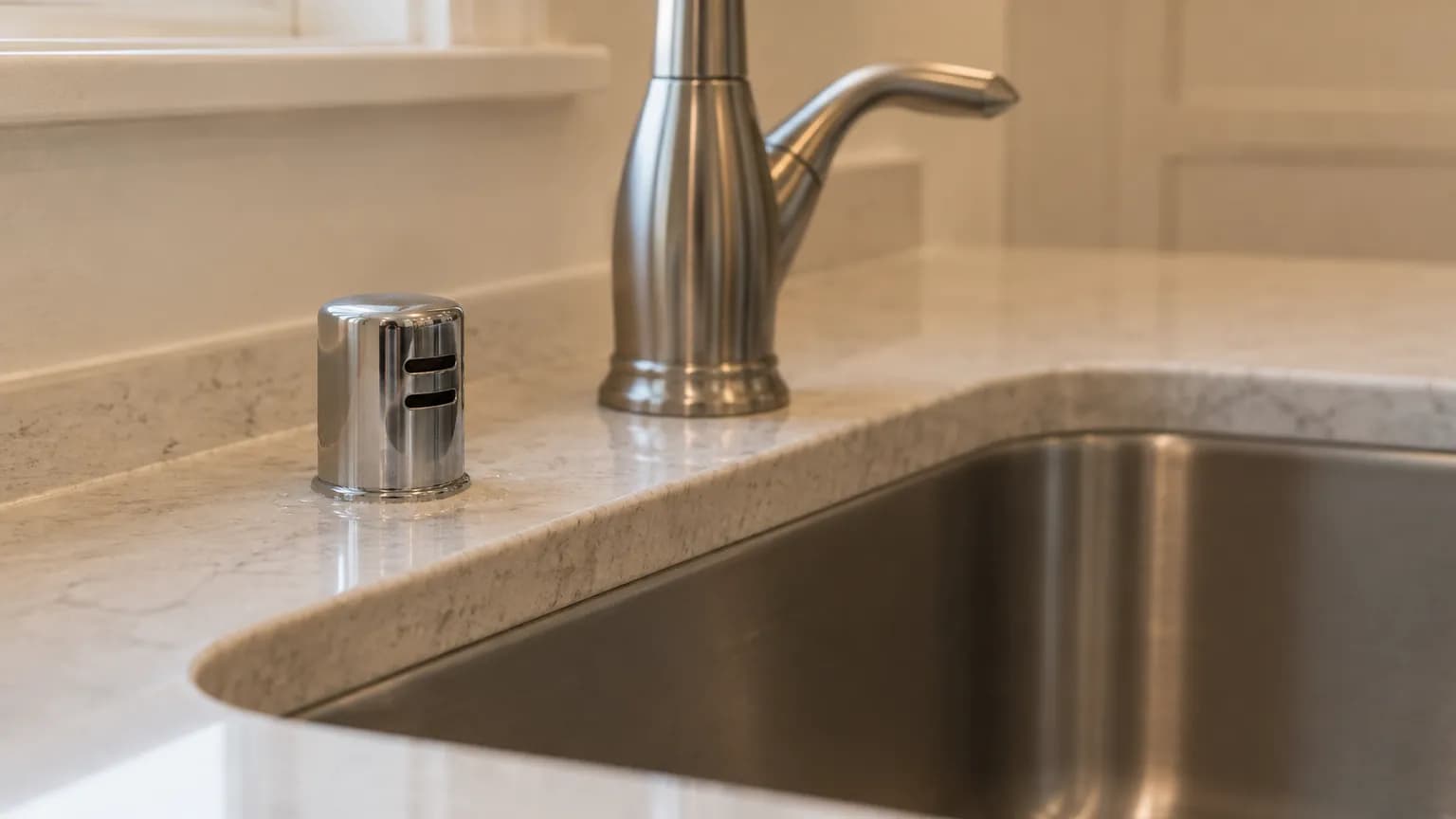
A dishwasher air gap, sometimes called a dishwasher sink vent, is the small cap on your sink next to the faucet. Dirty water from the dishwasher runs up into it and drops through open air into the drain, so a clogged sink cannot siphon that water back into the dishwasher. In California it is not optional: the state plumbing code requires one on a home dishwasher connected to a drain or garbage disposal. Water spurting out of it usually means a clog in the air gap or below it, and you can often clear that yourself.
This guide is written for homes in San Jose and across Santa Clara and Santa Cruz counties. If the dishwasher is also holding water, start with our guide to a dishwasher not draining.
- The air gap stops dirty sink and disposal water from siphoning back into your dishwasher.
- Section 807.3 of the California Plumbing Code requires an approved air gap fitting on a home dishwasher.
- Water coming out of the air gap means the path below it is blocked: the air gap, the hose, the disposal or the sink drain.
- A new disposal with its knockout plug still in place can cause it.
- Clear the air gap with a bottle brush. If it still overflows, the clog is further down.
What is a dishwasher air gap?
A dishwasher air gap is a small fitting, about 2 inches tall, mounted on the sink or countertop beside the faucet. The dishwasher pumps its drain water up into it, the water falls through an open air space into a second hose, and that hose carries it to the garbage disposal or the sink drain.
How an air gap connects under the sink
Under the sink, two hoses meet the air gap. The dishwasher's drain hose, usually 5/8 inch across, connects to the smaller inlet. A wider hose, usually 7/8 inch, runs from the outlet down to the garbage disposal's dishwasher inlet, or to a fitting on the sink drain if there is no disposal. Each connection is held with a clamp.
Between the two is open air, vented through the slots in the cap. Because of that break, a backed-up sink or suction in the drain line cannot pull dirty water back into the dishwasher. That is the whole job: keeping sink and disposal water away from the place your plates are washed.
Is an air gap required in California?
Yes. Section 807.3 of the California Plumbing Code says: "No domestic dishwashing machine shall be directly connected to a drainage system or food waste disposer without the use of an approved dishwasher air gap fitting on the discharge side of the dishwashing machine." It adds that the air gap must be installed with its flood-level mark at or above the flood level of the sink or drainboard, whichever is higher.
The current edition is the 2025 code, in effect since January 1, 2026. The California Building Standards Commission links to the plumbing code online, hosted by IAPMO.
Outside California you will often see a high loop instead: the drain hose is raised as high as possible under the counter. When a home inspector asked manufacturers, Kenmore and GE said a high loop or an air gap is needed to prevent backflow. In a California kitchen, the code names the air gap fitting.
Why is water coming out of my air gap?
Water spurting or spilling from the air gap while the dishwasher drains means it cannot get past the air gap fast enough. The air gap is doing its job: it sends the water into your sink instead of back into the dishwasher. The question is where the blockage is.
In the air gap itself. Food and grease build up inside it over time. This is the easiest one to fix.
In the hose to the disposal. The wider hose under the sink can clog or kink, and the water backs up into the air gap.
At the garbage disposal. A full disposal, or a new one with its knockout plug still in place, blocks the way out. One plumbing company names the forgotten plug as one of the most common reasons for an air gap clog.
In the sink drain. If the sink itself drains slowly, the clog is past the disposal, and cleaning the air gap will not fix it.
How to clear a clogged air gap
1. Turn things off
Make sure the dishwasher is not running. If you have a garbage disposal, switch it off before you work near it.
2. Take off the cap
Pull the decorative cover straight up, then lift or unscrew the smaller cap underneath. Rinse both in warm, soapy water.
3. Clear the tube
Push a bottle brush or air gap brush down the side that leads to the disposal and twist it to break up the debris. Keep going until you can see through the line.
4. Use suction if needed
If the brush does not shift it, seal a wet/dry vacuum hose over the air gap and run it for about a minute to pull the clog out.
5. Flush the sink and disposal
Run water in the sink and run the disposal to carry the loosened debris away. If the disposal is new and its knockout plug may still be in place, unplug the disposal or switch it off at the breaker before anyone works at its inlet, or call a plumber.
6. Test with a short cycle
Put the caps back, run a rinse or short cycle, and watch the air gap while the dishwasher drains. If water still comes out, the clog is further down the hose or the drain.
Leaking under the sink or a damaged cap?
Water under the sink, rather than out of the cap, points to a hose connection. InSinkErator's advice for a leak where the dishwasher hose meets the disposal is to tighten the clamps and check that any hose adapter is intact and tight.
A cracked cap or body, or an air gap loose in its hole in the sink deck, means the fitting needs replacing. Replacing it is plumbing work, and the code asks for its flood-level mark to sit at or above the flood level of the sink.
When to call for help
Call if the air gap still overflows after you have cleaned it, if the dishwasher is holding water as well, or if water is leaking under the sink at the hose connections. A slow sink with a clean air gap points to the sink drain, which is a plumber's job.
We repair dishwashers at your home in San Jose and across Santa Clara and Santa Cruz counties. If the problem turns out to be in your plumbing rather than the dishwasher, we will tell you so.
Common questions
Does my dishwasher need an air gap?
In California, yes, when it is connected to a drain or garbage disposal: section 807.3 of the California Plumbing Code requires an approved dishwasher air gap fitting. Other states set their own rules, and some accept a high loop instead.
Is it normal for water to come out of an air gap?
No. A working air gap passes the drain water straight through. Water spilling out of the vents means something below is blocked, usually food in the air gap, the hose to the disposal, or the disposal itself.
How do you connect a dishwasher to a garbage disposal with an air gap?
The dishwasher's drain hose goes to the air gap's smaller inlet, and a wider hose runs from the air gap's outlet to the disposal's dishwasher inlet, with a clamp on each connection. On a new disposal, the knockout plug inside that inlet has to be removed first.
Which states require an air gap for dishwashers?
California does, through section 807.3 of its plumbing code. Rules elsewhere vary by state and city, and some allow a high loop instead, so check your local plumbing code.
Is a high loop enough in California?
The California Plumbing Code calls for an approved dishwasher air gap fitting when a home dishwasher connects to a drain or disposal. A high loop is what many other places accept, but it is not the fitting the California code names.
How do I clean a dishwasher air gap?
Turn the dishwasher off, pull off the cover and the cap, and push a bottle brush down the side leading to the disposal until you can see through it. Then run the sink and the disposal, and test with a short cycle.
Air gap still overflowing? Call us
We repair dishwashers at your home in San Jose and across Santa Clara and Santa Cruz counties, with same-day service and a 3-month warranty on labor and parts.